Language
EN
$
Currency
USD
Marakele National Park
South Africa's Crown Jewel

Marakele NationalPark

A spectacular Big Five wilderness in South Africa's Waterberg Biosphere — home to one of the world's largest breeding colonies of Cape vultures, massive elephant herds, and dramatic mountain scenery within easy reach of Johannesburg.

Ancient Wisdom

Heritage StatusUNESCO Global
Guided ExperienceMaasai Led
The Destination

The Spirit of the Wild

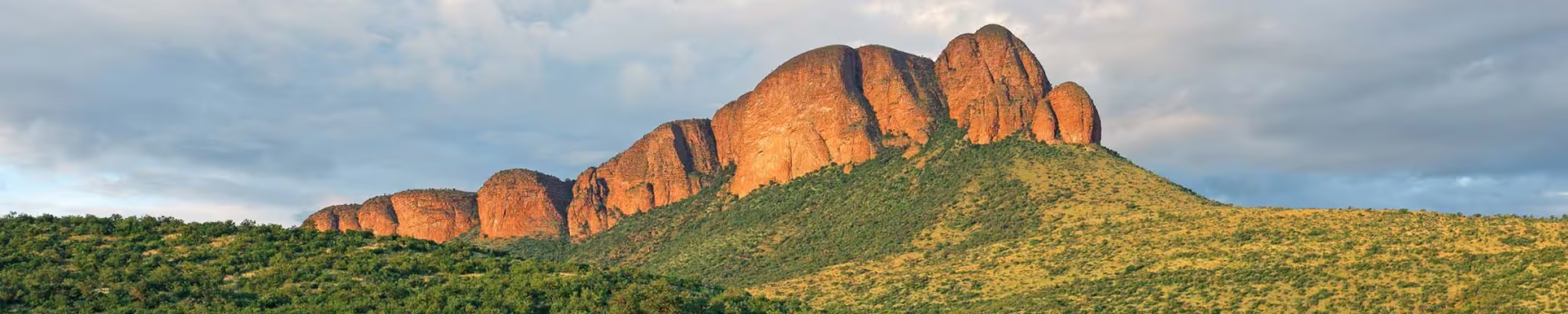
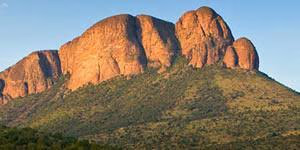
Marakele National Park is one of South Africa's most dramatically beautiful and ecologically significant protected areas, situated in the Waterberg Mountains of Limpopo Province, approximately 250 kilometres northwest of Johannesburg. The park covers over 67,000 hectares of rugged mountain terrain, open bushveld, and lush riverine forest — a landscape of extraordinary scenic grandeur that sets it apart from South Africa's better-known flat savannah parks.

Proclaimed a national park in 1994 and forming the core of the UNESCO-designated Waterberg Biosphere Reserve, Marakele is one of the few parks in the world where Big Five game viewing, dramatic mountain scenery, and globally significant bird conservation converge in a single destination. The park's varied habitats — from rocky outcrops and mountain slopes above 2,000 metres to open acacia plains and perennial streams — support an exceptional range of biodiversity across both mammal and bird life.

Marakele's most celebrated wildlife distinction is its colony of Cape vultures (Gyps coprotheres) — one of the largest breeding colonies on Earth, numbering over 800 nesting pairs on a single cliff face known as Kransberg. Watching these enormous raptors spiral on thermals above the mountains at close range is one of South Africa's great wildlife spectacles. The park is a critical stronghold for this endangered species.

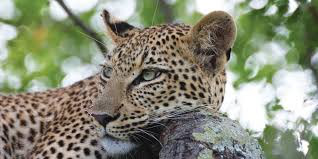
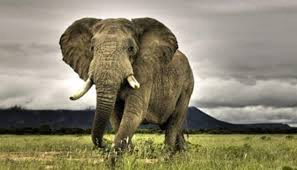
On the mammal front, Marakele supports the full Big Five — lion, leopard, elephant, rhino (both black and white), and buffalo. The park's elephant population is particularly impressive, with a herd frequently numbering 60 or more individuals — unusually large for a fenced South African reserve. Black rhino, rarely seen in many parks, are present and occasionally sighted in Marakele's rugged terrain.

The park is divided into two zones: the more accessible Bontle section to the south, with tar roads and a rest camp, and the remote Tlopi wilderness section to the north, accessible only by high-clearance 4WD. The Tlopi section in particular rewards adventurous visitors with solitary game drives, breathtaking mountain vistas, and a true sense of wilderness that is rare in modern South Africa.

When to Embark?

Official Recommendation
Best Months to Visit
May, Jun, Jul, Aug, Sep, Oct, Nov, Dec, Jan, Feb
Climate Pulse
20°C Avg High

Temperate African days and crisp, star-filled nights await your arrival.

Wildlife Surge
Peak Density

The absolute best window for clear vistas and peak predator sightings.

Wild Souls

The Magnitude of Herds

Everything here follows the ancient rhythm of the rains and the golden grass.

Lion

Ancient inhabitant of the Marakele National Park wilderness.

Elephant

Ancient inhabitant of the Marakele National Park wilderness.

Leopard

Ancient inhabitant of the Marakele National Park wilderness.

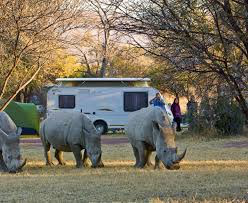
Rhino

Ancient inhabitant of the Marakele National Park wilderness.

Buffalo

Ancient inhabitant of the Marakele National Park wilderness.

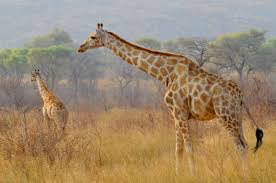
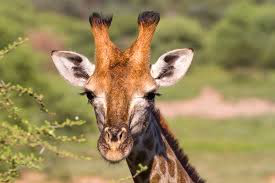
Giraffe

Ancient inhabitant of the Marakele National Park wilderness.

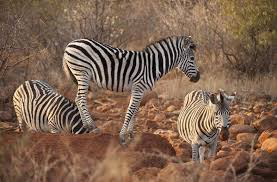
Zebra

Ancient inhabitant of the Marakele National Park wilderness.

Wildebeest

Ancient inhabitant of the Marakele National Park wilderness.

Geographic Heart

Lat: -23.996318 • Lng: 29.289783

Geographic Heart

Locate the Soul

Nestled within South Africa, the Marakele National Park represents one of the most significant ecosystems on our planet.

Exclusive Expeditions

Our Curated Safaris

Explore Collection
Crafting perfect itineraries for Marakele National Park .
Traveler Intelligence

Essential FAQ

Marakele National Park falls within South Africa's Waterberg region, which is classified as a very low or negligible malaria risk area — significantly lower than Kruger National Park and other northeastern lowveld destinations. Most travel health authorities do not recommend anti-malarial prophylaxis for the Waterberg. However, travellers with specific health conditions or those visiting during summer (higher mosquito activity) should consult their travel health physician before departure for personalised advice.
Yes — self-drive is the primary way most visitors experience Marakele. The Bontle section has excellent tar roads accessible to all standard vehicles, with well-marked game drive loops. The remote Tlopi wilderness section requires a high-clearance 4WD vehicle and advance permit, but rewards visitors with dramatic mountain scenery and complete solitude. Guided game drives are also available through the Bontle Rest Camp for those who prefer ranger expertise. There is no obligation to use a guide.
Marakele's Cape vulture colony at the Kransberg cliff is one of the largest and most accessible breeding colonies of this endangered species in the world, with over 800 nesting pairs on a single exposed cliff face. The Cape vulture is listed as Vulnerable on the IUCN Red List and has declined significantly across southern Africa due to poisoning, power line collisions, and habitat loss. Marakele provides a critical protected stronghold and monitoring site. Watching 800+ of these massive raptors spiral above the cliffs simultaneously is one of South Africa's truly extraordinary wildlife spectacles.
Marakele and Kruger offer very different experiences. Kruger is South Africa's flagship park — vast (2 million hectares), with well-developed infrastructure and consistent Big Five sightings, but also large visitor numbers. Marakele is much smaller (~67,000 ha), far less visited, and set in dramatic mountain terrain — offering an intimate, often crowd-free safari experience. Marakele's elephant herds are exceptionally large for a fenced reserve, its vulture colony is world-class, and the Waterberg scenery is more dramatic than Kruger's flat bushveld. For visitors seeking solitude and a different South African landscape, Marakele is the superior choice
A long day trip is possible — the drive from Johannesburg takes approximately 2.5 to 3 hours via the N1 and R516, and a full day allows time for one or two game drive loops in the Bontle section. However, an overnight or multi-night stay is strongly recommended to fully appreciate the park, including early morning and evening game drives when predator activity peaks, and to access the remote Tlopi section. SANParks accommodation at Bontle Rest Camp can be booked in advance through the SANParks website.
SANParks operates the Bontle Rest Camp within the park, offering self-catering cottages, safari tents, and camping facilities — all bookable through www.sanparks.org. The Tlopi Tented Camp in the northern wilderness section offers a more exclusive, remote experience and requires 4WD access; advance booking is essential. Several private lodges and guesthouses are also located just outside the park boundary near Thabazimbi, offering guided game drive options into Marakele on concession.
Marakele is excellent for birding year-round, but the optimal periods are October to January when summer migratory species arrive from Central Africa and Europe, filling the park with colour and activity. The Waterberg is home to several regional specialities including the Waterberg rock thrush and Carp's tit, while raptors — particularly the Cape vulture, martial
Capturing the Essence

Visual Odyssey

Marakele National Park  Gallery Image 1
Marakele National Park  Gallery Image 2
Marakele National Park  Gallery Image 3
Marakele National Park  Gallery Image 4
Marakele National Park  Gallery Image 5
Marakele National Park  Gallery Image 6
Marakele National Park  Gallery Image 7
Marakele National Park  Gallery Image 8

Maasai African Guides

Ancient Wisdom. Modern Luxury

"Our mission is to bridge the gap between ancient wilderness wisdom and modern traveler expectations, ensuring every safari is a journey of integrity and enlightenment."

Premium Destinations

Serengeti Migration

The Great Migration tracking

Ngorongoro Crater

The Africa's Eden experience

Tarangire Elephants

The Elephant sanctuary visits

Selous Game Reserve

The Remote wilderness camps

Ruaha National Park

The Untouched landscapes

Zanzibar Extension

The Private island retreats

Plan Your Ritual
Design Bespoke Safari
Terms & Conditions
Crafted by Esiringet Cloud CMS — Warrior Edition

© 2026 Maasai African Guides