Language
EN
$
Currency
USD
Ngorongoro Crater
Signature Experience

NgorongoroCrater

(4.9/5)
Serengeti National Park
1 Day

Rising from the floor of the Great Rift Valley, the Ngorongoro Crater is a testament to the raw power of the natural world. Formed some three million ...

Ngorongoro Crater Preview
Starting Investment
$295.00
Per Passenger • Inclusive

Experience Overview

Rising from the floor of the Great Rift Valley, the Ngorongoro Crater is a testament to the raw power of the natural world. Formed some three million years ago when a colossal volcano collapsed inward upon itself, the crater's sheer walls — rising up to 600 metres — create a near-perfect enclosure that has evolved into one of the most biodiverse ecosystems on the planet.

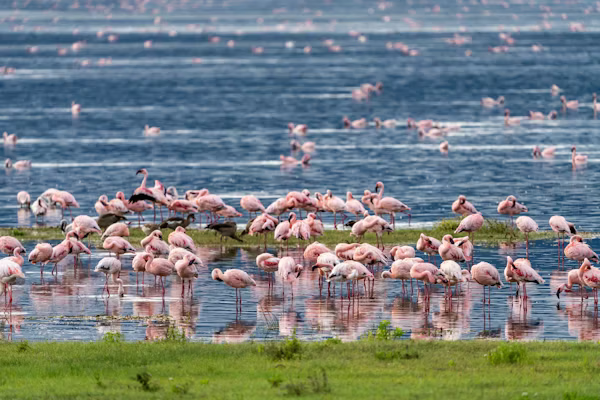
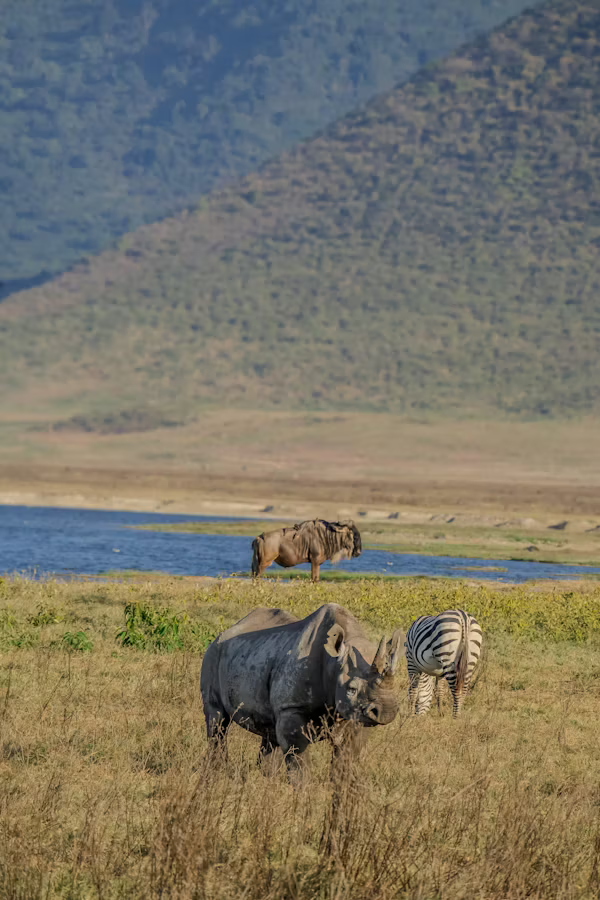
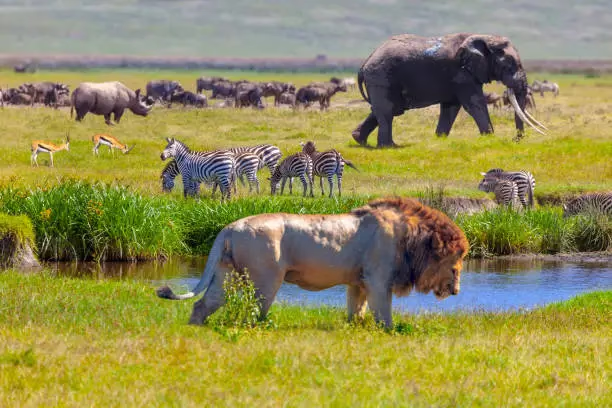
The crater floor is a mosaic of habitats: open grassland, acacia woodland, swamps, and the alkaline waters of Lake Magadi — each sustaining a distinct community of wildlife. The resident population of large mammals is exceptional by any measure: black rhino, lion, leopard, cheetah, elephant, hippo, and the full cast of plains game coexist within a landscape that can be explored in a single day, yet demands a lifetime of return visits.

The Ngorongoro Conservation Area (NCA), which encompasses the crater, is unique among African protected areas in that it allows the Maasai people to continue their traditional pastoral lifestyle alongside the wildlife. This cultural dimension — the sight of red-cloaked Maasai herders against the backdrop of the crater rim — adds a profound human layer to the safari experience.

For UHNWI and HNWI travellers, Ngorongoro offers the rarity of guaranteed high-density wildlife encounters combined with the theatrical drama of the caldera landscape. Private crater descents, exclusive game drives at sunrise before the crowds arrive, helicopter flips over the rim, and bespoke sundowner experiences on the crater rim at 2,286 metres of altitude represent the pinnacle of luxury wildlife travel

Visual Registry

Ngorongoro Crater Gallery Image 1
Ngorongoro Crater Gallery Image 2
Ngorongoro Crater Gallery Image 3

Safety Protocol

  • Certified Professional Guides
  • Comprehensive Medical Coverage
  • Regular Equipment Audits
  • Emergency Response Logistics
  • Real-time Climate Monitoring

Requirements

  • Maturity Registry
    Minimum Age: 6 Years
  • Intensity Level
    Moderate Expedition
  • Group Logistics
    Max 7 Adventurers

Gear Manifest

4x4 vehicle

Expedition Intelligence (FAQ)

What is the Ngorongoro Crater and why is it special?

Ngorongoro is the world's largest intact and unflooded volcanic caldera, formed approximately 3 million years ago. Spanning 304 km², it forms a near-complete ecological enclosure that supports an extraordinary year-round wildlife population of around 25,000 large mammals — including one of Africa's densest concentrations of the Big Five. Its UNESCO World Heritage status and sheer scale make it one of the most iconic safari destinations on the continent.

When is the best time to visit Ngorongoro Crater?

The dry season from June to October offers the finest game viewing as vegetation thins and animals concentrate around permanent water sources. January and February are also excellent, coinciding with the Serengeti calving season. For exclusive, crowd-free experiences, the green season (November – May) is increasingly popular among UHNWI and HNWI travellers seeking privacy.

Is it possible to see all Big Five in one crater descent?

Ngorongoro is one of the very few places in Africa where it is genuinely possible to encounter all Big Five — lion, leopard, elephant, buffalo, and black rhino — within a single day. While sightings are never guaranteed, the resident wildlife population and the enclosed geography of the crater make multi-species encounters highly probable.

Can private or exclusive crater access be arranged?

Yes. Select luxury lodges and specialist operators can arrange early morning private access to the crater before the daily vehicle quota reaches capacity. Private crater descents with dedicated naturalist guides, exclusive bush breakfast setups on the crater floor, and bespoke sundowner experiences on the rim can all be arranged for UHNWI and HNWI guests.

Are helicopter transfers or aerial experiences available?

Private helicopter charters can be arranged from Arusha, the Serengeti, or Lake Manyara for seamless, scenic transfers to the crater rim. Aerial fly-overs of the crater are a spectacular addition to any itinerary and provide unparalleled photographic opportunities. Please liaise with your dedicated travel specialist for bespoke arrangements.

What are the conservation fees for the crater?

Fees are set by the Ngorongoro Conservation Area Authority and subject to annual revision. For 2026/2027, expect to pay approximately USD 295. per vehicle for the crater service fee, USD 71. per person per day in conservation fees, and a mandatory registered guide fee. All fees are typically included in premium lodge safari packages.

Is Ngorongoro Crater suitable for families with children?

Yes. The enclosed nature of the crater and the high density of wildlife make it one of the most child-friendly safari destinations in Africa, with exceptional wildlife encounters that do not require long drives across open plains. Many crater rim lodges offer family suite configurations and dedicated junior guide programming.

How does Ngorongoro combine with other Tanzania destinations?

Ngorongoro pairs naturally with the Serengeti (2–3 hours by road or 30 minutes by charter flight), Lake Manyara (1 hour), Tarangire (2–3 hours), and Zanzibar (beach extension via Kilimanjaro or Arusha). A classic itinerary for UHNWI/HNWI travellers combines 2 nights at Ngorongoro, 3–4 nights in the Serengeti, and 3–4 nights in Zanzibar or Pemba Island.

What is the Ngorongoro Conservation Area's approach to Maasai communities?

The NCA is unique in Africa as a multiple land-use area where the indigenous Maasai are permitted to live and graze their cattle alongside wildlife. Cultural visits to Maasai bomas (villages) can be arranged and provide meaningful, authentic interactions with one of Africa's most recognised pastoral communities. Responsible community-based tourism initiatives support Maasai livelihoods directly.

What is Olduvai Gorge and is it worth visiting?

Olduvai Gorge, located approximately 45 km from the crater, is one of the most important paleoanthropological sites in the world — often referred to as the 'Cradle of Mankind.' Fossil evidence of early hominids, including Homo habilis and Paranthropus boisei, was discovered here by Louis and Mary Leakey. A private guided visit with a specialist paleoanthropologist makes for an exceptional cultural and scientific detour.
Testimonials

Adventurer Dispatch

★★★★★
4.9 / 5
Based on 184 Reviews
"
Jennifer Walsh
Jennifer Walsh
Australia

Absolutely magical! The sunrise flight over the Serengeti was the highlight of our entire African adventure. The pilot was skilled and knowledgeable, and the champagne breakfast was perfect.

August 2024
"
Michael Torres
Michael Torres
USA

Incredible views of the Great Migration from above! Saw thousands of wildebeest crossing the river. Professional crew and smooth flight. Worth every penny.

September 2024
"
Emma Thompson
Emma Thompson
UK

Perfect proposal setting! My fiancé proposed during the flight with the endless Serengeti as our backdrop. An unforgettable moment!

July 2024
Maasai African Guides

Maasai African Guides

Ancient Wisdom. Modern Luxury

"Our mission is to bridge the gap between ancient wilderness wisdom and modern traveler expectations, ensuring every safari is a journey of integrity and enlightenment."

Premium Destinations

Serengeti Migration

The Great Migration tracking

Ngorongoro Crater

The Africa's Eden experience

Tarangire Elephants

The Elephant sanctuary visits

Selous Game Reserve

The Remote wilderness camps

Ruaha National Park

The Untouched landscapes

Zanzibar Extension

The Private island retreats

Plan Your Ritual
Design Bespoke Safari
Terms & Conditions
Crafted by Esiringet Cloud CMS — Warrior Edition

© 2026 Maasai African Guides